LAW ON ANIMAL HUSBANDRY
The 2018 Law on Animal Husbandry, passed by the National Assembly of Vietnam on September 11, 2018 and effective from January 1, 2020, clearly stipulates the conditions that livestock farms must comply with.
Guiding documents on the 2018 Law on Animal Husbandry, including:
|
Registration number |
Name |
Main content |
|
Decree 13/2020/ND-CP |
Detailed instructions on the 2018 Law on Animal Husbandry |
Detailed regulations on aspects related to animal husbandry activities |
|
Decree 46/2022/ND-CP |
Amending and supplementing a number of articles of Decree No. 13/2020/ND-CP |
Adjusting a number of provisions of Decree No. 13/2020/ND-CP |
|
Decree 106/2024/ND-CP |
Regulating policies to support improving the efficiency of animal husbandry |
Support measures and policies |
|
Decree 06/2022/ND-CP |
Regulations on greenhouse gas emission reduction and ozone layer protection |
Regulations on greenhouse gas emission reduction measures (Draft circular) |
|
Draft circular … /2024/TT-BNN&PTNT |
Technical regulations on measurement, reporting, appraisal of greenhouse gas emission reduction and greenhouse gas inventory in the livestock sector |
Measurement, reporting, appraisal of emission reduction in livestock (Expected to be issued Circular at the end of 2024) |
|
Circular 23/2019/TT-BNNPTNT |
Guiding a number of articles of the Law on Animal Husbandry |
Detailing a number of articles of the Law on Animal Husbandry |
General provisions
-
-
Livestock raising is NOT allowed in urban areas, towns, townships, and residential areas (except for raising ornamental animals and raising animals in laboratories without causing environmental pollution).
-
Livestock facilities built and operating before the effective date of this Law located in unauthorized areas must complete meet the conditions and stop operation or relocation to a suitable location within 05 years from the effective date of this Law.
-
Conditions for Livestock scale and safety distance in farm livestock farming are prescribed as follows (according to Clause 2, Article 21 of Decree 13/2020/ND-CP and according to Circular 23/2019/TT-BNNPTNT):
-
|
Type of farm |
Livestock unit |
Residential area, domestic and industrial waste treatment area |
Schools, hospitals, markets |
Water supply for residential communities |
|
Large-scale farms |
From 300 livestock units or more |
400 m |
500 m |
500 m |
|
Medium-scale farms |
From 30 to less than 300 livestock units |
200 m |
300 m |
300 m |
|
Small-scale Farm |
From 10 to less than 30 livestock units |
100 m |
150 m |
150 m |
|
Household livestock farming |
Less than 10 livestock units |
No specific regulations on distance |
||
|
Conversion: 01 livestock unit is equivalent to 500kg of live livestock currently at the livestock facility (being raised). Principle for determining distance: Shortest distance from the barn or livestock waste storage area to the fence or boundary of the affected object
|
||||
Prohibited acts in livestock farming
-
Raising in areas not permitted
-
Using banned substances, using antibiotics not permitted to circulate in feed animal feed and growth stimulants Destroying and appropriating animal genetic resources. Illegal export of rare and precious livestock genetic resources.
-
Importing and using prohibited substances in livestock products.
-
Prohibiting the import of livestock products containing prohibited substances.
-
Importing, trading, and processing livestock products from animals that have died or have unknown causes.
-
Illegally importing, raising, releasing, and using genetically modified animals and products from genetically modified animals.
-
Fraudulent and deceitful acts in livestock farming.
-
Discharging or receiving waste in violation of environmental protection laws.
-
Obstruction or sabotage of legitimate livestock farming activities of people Other.
Conditionsfor granting a license to raise livestockfarms
-
Construction location: In line with the local and regional socio-economic development strategy; Meet livestock density.
-
Water source: Ensure quality for livestock operations and waste treatment.
-
Environmental protection: Have environmental protection measures according to legal regulations.
-
Cages and equipment: Suitable for each type of livestock.
-
Records: Record the operation process, use of animal feed, veterinary medicine, vaccines; Store for at least 01 year after the end of the breeding cycle.
-
Safe distance: Ensure the distance from the breeding area to the affected object and from the source of pollution to the breeding area.
-
Organizations and individuals raising large-scale farms must be granted a Certificate of eligibility for breeding.
-
The Minister of Agriculture and Rural Development prescribes safe distances in breeding farms to ensure biosafety, disease safety and environmental protection.
Responsibility of farm owners
-
Comply with breeding conditions according to the Law on Animal Husbandry 2018:
-
-
Farm owners must comply with the conditions on safe distances and conditions of livestock facilities prescribed in the Law.
-
In particular, livestock facilities that existed before the Law took effect must meet these requirements, otherwise they will be suspended or have to change their business lines. Farms that do not meet the conditions may be required to relocate according to provincial documents.
-
-
Livestock waste treatment
-
-
Farm owners must have measures to treat livestock waste in accordance with legal regulations and use treatment products on the list permitted by the Ministry of Agriculture and Rural Development.
-
Ensure no impact on the surrounding environment (industrial parks, residential areas, etc.).
-
Encourage the application of new, breakthrough solutions and science and technology in treating odors and environmental problems.
-
-
Application of science and technology in livestock farming:
-
-
Farm owners must apply scientific and technological solutions to improve livestock farming efficiency and ensure compliance with current legal regulations.
-
-
Reducing greenhouse gas emissions
-
-
Farm owners need to apply solutions to reduce greenhouse gas emissions in livestock farming and implement recommendations from the Ministry of Agriculture and Rural Development.
-
Policies to encourage livestock waste treatment
|
Support categories |
Maximum support rate |
Household livestock farming |
Small and medium-sized farm livestock farming |
Large-scale farm livestock farming |
Support conditions |
|
Livestock waste treatment |
<50% |
VND 5 million/facility |
VND 50 million/facility |
VND 100 million/facility |
– According to Article 55, Article 56, Clause 2, Article 57 of the Law on Animal Husbandry. – Raising livestock and poultry; Construct new biogas works in accordance with the technical instructions of the Ministry of Agriculture and Rural Development; – Use livestock waste treatment products that have been announced or recognized as technical advances on the Electronic Information Portal of the Ministry of Agriculture and Rural Development. |
|
Biogas works |
<50% |
VND 7 million/work |
VND 300 million/work |
VND 1 billion/work |
|
|
Purchase materials, testing costs for biosafety, disease safety |
<50% |
20 million VND/facility |
50 million VND/facility |
200 million VND/facility |
Benefits and sanctions of the animal husbandry law

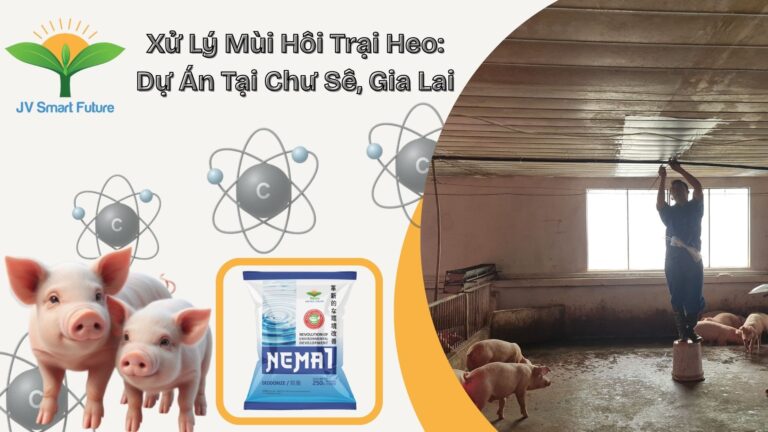
Products Livestock waste treatment Organic Carbon (Nema1) – Sustainable solution for sustainable livestock development
The livestock industry is growing strongly in Vietnam and around the world, leading to environmental challenges, especially waste treatment and minimizing soil, water and air pollution. Faced with this situation, Japanese researchers have developed an advanced material called Organic Carbon, contributing to solving environmental problems in livestock farming.
Organic Carbon (Nema1) – New breakthrough technology product.
-
Organic Carbon (Nema1) is a new material, created by processing cellulose at the atomic level through a special manufacturing process. This is a material that does not exist in nature but is completely synthesized by modern technology.
-
Organic Carbon (Nema1) has an extremely good ability to absorb ions, is a highly active allotrope of the element Carbon. Thanks to that, Organic Carbon (Nema1) easily attracts other substances, and quickly decomposes and decomposes waste.
Organic Carbon (Nema1) – A solution to treat odors at the root
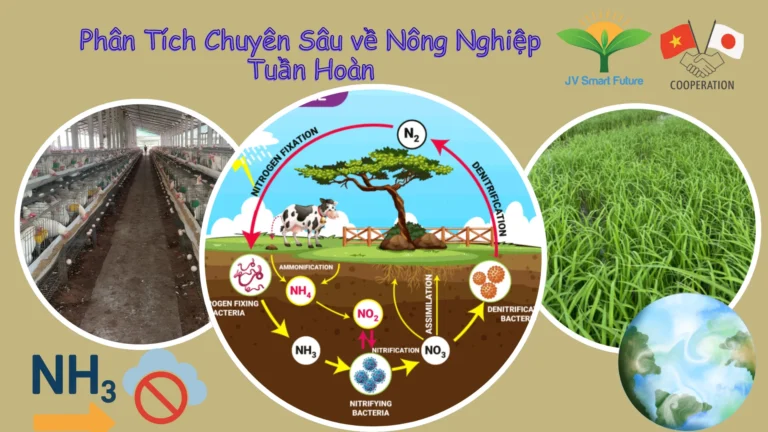
In the livestock farming process, odors mainly arise from feces, urine and emissions from the decomposition of organic matter. This process creates gaseous compounds such as: ammonia (NH₃), hydrogen sulfide (H₂S), and other odorous organic compounds.
When using Organic Carbon (Nema1) in the barn, it quickly absorbs and decomposes these odor-causing compounds thoroughly. Instead of just masking or temporarily reducing odors, the product helps decompose and eliminate odor-causing substances at the source, creating a cleaner and safer environment for pets and workers.
Organic Carbon (Nema1) is versatile in its application from household farming to large-scale farms, suitable for many types of livestock such as livestock, poultry, and aquaculture.
Organic Carbon (Nema1) – Environmental and sustainable benefits
Made from selected organic materials, free of toxic substances, Organic Carbon is safe for humans, animals and plants, and does not cause secondary pollution.
Organic Carbon (Nema1) not only treats odors but also improves the environment. Organic Carbon helps increase the C/N ratio, helping the waste decomposition process to be faster, creating conditions for beneficial microorganisms to develop.
Organic Carbon (Nema1) – Safety and effectiveness have been recognized
-
The product is recognized by the Vietnam Department of Livestock Production for its effectiveness and safety in treating livestock waste containing New Substances, ensuring compliance with the law.
-
The product has undergone practical evaluation on the farm and has given very good results.
Organic Carbon (Nema1) – Contributes to economic efficiency
-
The use of Organic Carbon helps keep the barn environment clean, odorless, improves animal health and increases productivity. Livestock facilities will reduce waste treatment costs, legal risks and build reputation thanks to clean, safe, and organic products.
Organic Carbon (Nema1) – Special application in pig farming
Organic Carbon (Nema1) controls the environment well to help improve economic efficiency, especially in pig farming. 3 effects achieved when applying the solution:
-
First: Animal health is a key factor determining the productivity and quality of pig farming products. When the living environment in the barn is maintained clean, with little odor, pigs will be less stressed and have better resistance, thereby minimizing the risk of disease. This helps reduce the cost of medicine, veterinary services, and improve the survival rate of pigs, especially during sensitive periods such as lactation and fattening.
-
Second: Good environmental control helps increase growth rate and improve meat quality. Pigs raised in cool, hygienic conditions and without stress (due to the effects of toxic gases) will have a faster growth rate, use feed more effectively, thereby helping to shorten the rearing time and reduce feed costs – one of the biggest costs in pig farming. At the same time, the quality of meat from pigs raised in a good environment will be higher, with less harmful residues, meeting the increasingly strict demands of the market, especially the export market.
-
Third: A good breeding environment also helps increase production efficiency by minimizing damage caused by disease. A polluted environment can easily become a source of dangerous diseases such as African swine fever (ASF) or foot-and-mouth disease, which can cause serious damage to the entire livestock industry. On the contrary, maintaining a clean environment, free of bad odors and harmful bacteria, will play an important role in disease prevention, helping to minimize economic risks.
See More:
>>>NEMA1 Organic Carbon Special Page
>>> Application of Organic Carbon in pig farming
>>> Application of Organic Carbon in poultry farming
>>> Application of Organic Carbon in cattle farming
Conclusion
-
In the modern livestock industry, effective waste management and treatment is not only a matter of compliance with the Law but also an important factor to ensure sustainable development. Organic Carbon products (Nema1) meet many criteria set forth by the Law on Livestock such as: Application of high-tech products; Thoroughly treat livestock waste, improve livestock quality, and improve the livestock environment.
-
In addition, controlling the environment using organic products also helps livestock farms enhance their reputation and brand, creating favorable conditions for accessing high-end markets and consuming products more quickly. When the quality of pork is improved and the livestock farming process complies with safety and environmental standards, farms will easily sign contracts with major partners, thereby increasing REVENUE and PROFIT.
-
Thus, effectively controlling the livestock environment, combined with the use of organic products such as Organic Carbon (Nema1), not only protects the health of livestock but also contributes to optimizing economic efficiency, creating a great competitive advantage for livestock farms, especially in the livestock sector. pig.