News

CONTROL SOIL PH AND CARE OF PEPPER GARDENS

Pepper is one of the industrial crops with high economic and export value, which is being invested in and developed strongly in our country. Every year, this crop brings in a fairly high income compared to many other crops. Pepper can be grown on many different types of soil.

However, to achieve high productivity, in addition to the issue of varieties and care measures, it also needs to be provided with adequate necessary nutrients.

left quote 1

For land converted from other perennial crops (such as coffee, rubber, cocoa, cashew…) it needs to be plowed to loosen the soil, and cleared of large tree branches and roots.

tru song cho tieu 4
Pepper is one of the industrial crops with high economic value and export value.

According to agricultural experts, pepper growing soil requires the following conditions:

  • soil pH from 5.5 – 6.5, not acidic
  • 1-2m cultivation layer rich in humus and loose
  • Has good drainage, not subject to prolonged flooding, especially during the rainy season
  • For land converted from other perennial crops (such as coffee, rubber, cocoa, cashew…) it is necessary to plow to loosen the soil, clear large tree branches and roots. Treat nematodes and other pathogens in the soil. It is possible to plant 1-2 crops (prioritizing legumes) before planting pepper to stabilize the soil and restore beneficial microorganisms in the soil.
  • During the cultivation of color crops, live pole plants can be planted first, so that when pepper is released, the live poles have developed well enough.
  • For newly reclaimed land, the same procedure is followed and if conditions permit, green manure, manure, organic carbon, microorganisms, etc. should be added during the plowing process.
pH dat
pH around 5.5 - 6.5 is favorable condition for growing pepper.

1. Control the pH of the soil for growing pepper

In which, the pH of the soil, also known as the reaction of the soil, greatly affects the life of the plant. If grown in soil conditions with low pH (acidic soil), the plant is very susceptible to disease and productivity decreases.

Pepper is a plant that is very fond of near-neutral soil. When the soil pH reaches about 6.0, the roots grow very strongly, the plant absorbs nutrients very well, and the leaf color is beautiful.

To get the desired pH, we introduce to you the product Nema2, which helps balance the pH, improve and loosen the soil. Creating conditions for microorganisms to grow, pepper roots easily absorb nutrients, thereby increasing pepper productivity.

web nema2
Organic carbon helps balance pH

2. About pepper planting density and spacing

Depending on the slope of the land, fertility and planting style (monocropping or intercropping). Planting density and spacing will vary, usually planting at a distance of 2.5m x 2.5m is optimal.

  • Density 1,200 – 1,600 pepper poles/hectare.
  • Maximum does not exceed 2,000 poles/hectare.

3. Choosing pepper varieties

Most of the current pepper varieties have been selected, so there is not much difference in yield and growth.

People should choose varieties that are well-known and have stable yield such as

  • Vinh Linh pepper: High and stable yield, fast growth but poor disease resistance
  • Buffalo pepper: Slightly lower yield, but the plant grows strongly and is more disease resistant
  • Sri Lanka pepper: Lots of fruit, good yield, growth and disease resistance
  • Other pepper varieties: Phu Quoc pepper, Loc Ninh pepper, Ba Ria pepper… are all quite good choices
giong tieu srylanka 1 mat
You should choose varieties that have a reputation and stable productivity.

4. Cultivation time

The most suitable time to plant pepper is at the beginning of the rainy season, around April-May DL. However, if you are proactive about irrigation water, you can plant earlier when the weather warms up after Lunar New Year (around February-March DL).

In addition, if you plant intercropping – intercropping coffee, you can also plant later, around June. About 1 month before planting, you should prepare the planting hole, the planting hole is usually 30 to 40cm in size if planting 1 pepper bulb/hole, or 50 to 60cm if planting 2 pepper bulbs/hole.

5. Preventing pepper pests

Pepper is a sensitive plant and is vulnerable to pests. Once infected, the disease spreads very quickly and treatment is costly and ineffective, so the main thing is disease prevention.

The following principles need to be applied and strictly followed

  • Regularly visit the garden to detect pests in time
  • Clean the garden, prune the pepper poles to create a dry and airy space
  • On the surface of the planting soil, there should be vegetation (all kinds of grass) to share pathogens, limit the spread of disease, keep the soil moist during the dry season, however, it is necessary to regularly clear the grass periodically with a weed cutter, avoid dense grass which is counterproductive
  • Do not plant pepper at too high a density
  • Limit raking, damaging the pepper roots
  • Balance fertilizer, prioritize organic fertilizers and foliar fertilizers, inorganic fertilizers should only be used during important growth stages
  • Annually, antagonistic fungi and microorganisms should be added benefits
  • Spray fungicides and pesticides periodically, especially during the transition between seasons, to prevent sucking insects when the plant sprouts and prepares to flower
  • When detecting diseased plants, it is necessary to isolate, treat and destroy them immediately to avoid spreading

The above is some information that JVSF wants to send to pepper farmers. Hopefully it will provide the necessary knowledge to help the crop yield a bumper crop

bon phan ho tieu
Regularly visit the garden to detect pests and diseases promptly.

🛒 Mua sản phẩm Carbon Hữu Cơ Nema2 từ nhà sản xuất tại:

🌐 Website: https://jvsf.vn/

📍 Địa chỉ: SH06-SH07, Tòa nhà Opal, Saigon Pearl, Số 92 Nguyễn Hữu Cảnh, Phường 22, Quận Bình Thạnh, TP. Hồ Chí Minh

📞 Hotline: (+84) 945.306.068

Ngoài ra bạn có thể mua sản phẩm tại NPP và trên gian hàng điện tử.

Share

Products

Previous
Next

Ongoing Project

Organic Carbon Application – NEMA1

Picture2gg
Environmental Treatment of Wastewater Tank – Food Processing Factory, Ben Luc – Long An
NEMA1 UNG DUNG HE THONG XLNT NHA MAY
Organic Carbon Solution For Wastewater Treatment Plant _ Milk Processing Factory, Truong Tho – Thu Duc – Ho Chi Minh City
Trai ga chu Thuan Long An
Effective environmental treatment for an 8,000-chicken farm in Long An – Practical solutions from JVSF
Trai Vit San Ha Ho thong su dung NEMA1 tu dong
San Ha duck farm environmental solution_Long An
Trai heo Tay Hoa He thong phun trong chuong nuoi 2
Environmental treatment of Tay Hoa pig farm – Phu Yen
Trai heo Vissan He thong phun 2
Environmental treatment of Vissan pig farm_Binh Thuan
Trai heo Na Ri 4
Environmental treatment of NA Ri sow farm _Bac Can
Trai heo CNC Thanh Thai Tay Ninh 3
Environmental treatment of Thanh Thai CNC pig farm
Trai vit LA
APPLICATION OF ORGANIC CARBON IN ODOR TREATMENT OF DUCK FARM IN THANH HOA, LONG AN
VNM HA TINH
ORGANIC CARBON TECHNOLOGY COMPLETELY TREATS ODOR IN LIVESTOCK FARM AT HA TINH DAIRY FARM

Organic Carbon Application – NEMA2

Anh Xuan – Chu vuon sau rieng tai Cai Be Tien Giang
Improving Alum-Contaminated Durian Orchards in Cai Be, Tien Giang: Experience from Anh Xuan and NEMA2 Organic Carbon Solution
20240116 website chau phi copy
ORGANIC CARBON IS NOW AVAILABLE IN AFRICA
Hoa nang farm Webp 2
HOA NANG FARM SUCCESSFULLY INCREASED ST25 RICE YIELD BY MORE THAN 20% WITH ORGANIC CARBON
Du an NFC 2 1
REDUCING ALUM USING ORGANIC CARBON FOR ORGANIC CULTIVATION AREA IN THANH HOA, LONG AN

Related Posts

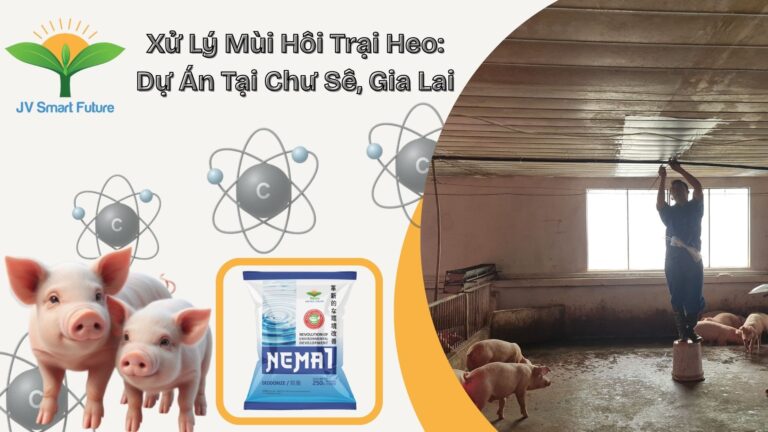
Dự án xử lý mùi hôi trang trại heo Chư Sê
Pig Farm Odor Control in Chu Se, Gia Lai

Pig Farm Odor Control: A Case Study on Sustainable Farming Table of Contents Odor Control Project at Chu Se Farm, Gia Lai: Solving the Sustainable Development Challenge Introduction to Chu Se Farm The Investor’s Vision for Odor Control Identifying the Main Odor Sources JVSF’s Breakthrough Odor Control Technology: Automated Rain

JVSF xuất khẩu Organic Carbon NEMA1 cho F&N Malaysia (Xử lý môi trường chăn nuôi bò sữa )
A Comprehensive Solution for Dairy Farm Environmental Management: The Landmark Partnership Between JVSF and Fraser & Neave (F&N)

A Comprehensive Solution for Dairy Farm Environmental Management: The Landmark Partnership Between JVSF and Fraser & Neave (F&N) The global industrial-scale dairy farming sector is at a critical juncture. The pressures of food security and economic efficiency must go hand-in-hand with increasingly stringent demands for sustainability and environmental responsibility. In

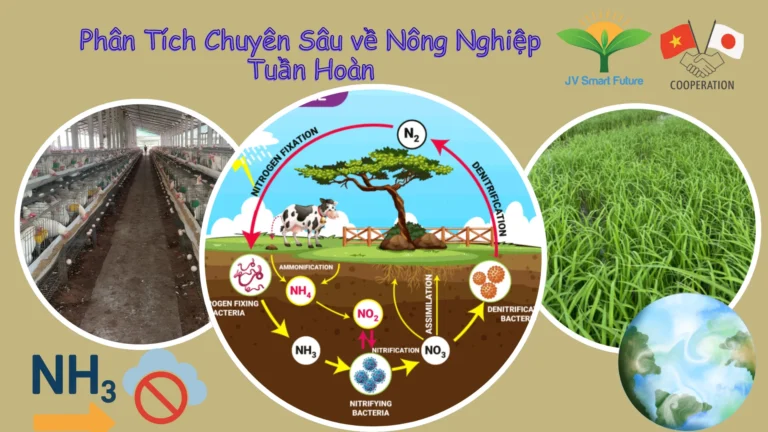
Phân Tích Chuyên Sâu về Nông Nghiệp Tuần Hoàn.
In-Depth Analysis of Circular Agriculture and Organic Carbon Technology

🌾 Integrated Circular Agriculture: An In-Depth Analysis of the Catalytic Role of Organic Carbon Technology 🔬 Part I: Foundation: Principles and Potential of Integrated Circular Agriculture 1.1. Redefining Agricultural Production: From a Linear to a Circular Model 🔄 For decades, modern agriculture has operated primarily on a linear “take-make-dispose” model.

Vietnamese Farmers: From Traditional to Professional & Smart | JVSF

Vietnamese Farmers: From Traditional to Professional and Smart Perspectives from the scientific conference of the same name September 24, 2025, at the School of Public Policy and Rural Development On September 24, 2025, at the School of Public Policy and Rural Development (Ho Chi Minh City), JVSF was honored to

Phone
WhatsApp
Messenger
Zalo
Messenger
WhatsApp
Phone
Zalo