- Carbon is the fourth most abundant element in the universe by mass after hydrogen, helium, and oxygen.
- Carbon is present in the majority of all organic life and is the basis of organic chemistry.
- This nonmetal also has the remarkable chemical property of being able to bond to itself and to a wide range of other elements, creating nearly 10 million known compounds.

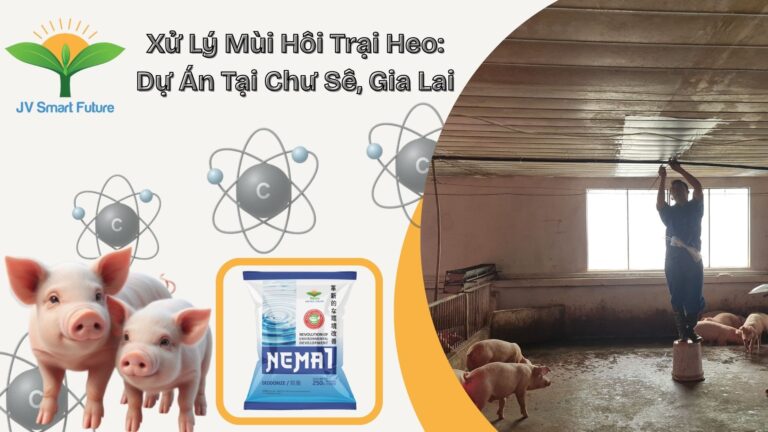
Organic Carbon particles with an atomic size of 0.16 nanometers can penetrate entities and recreate their inherent natural activities.

- Based on this basic principle, since the early 2000s, Japanese experts, typically Dr. Yukihiro Sugiyama, have researched and successfully extracted Organic Carbon in the laboratory.
- After a period of time, Organic Carbon has been put into practice and applied in the fields of production, environmental improvement and human health care.
Specific applications in life
- Organic carbon has strong activity, high PH (>8) and is easy to use, so after being mixed with water at certain ratios, it will be sprayed or used directly
Applications in livestock agriculture:
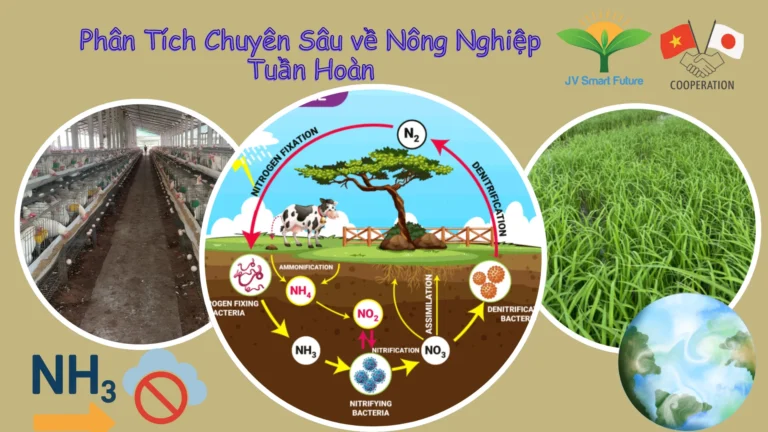
Organic carbon easily combines and separates odorous compounds such as Ammonia (NH3), Hydrogen sulfide (H2S), Methane (CH4), Volatile organic acids… thereby helping to handle problems such as:
- Eliminate barn odors
- Wastewater treatment.
- Accelerate the composting process
- Repel harmful insects, reduce flies and mosquitoes
- Increase resistance for animals raising by bathing and giving animals water.
- Purifying drinking water.
Applications in agricultural cultivation:
Organic carbon is also widely used in agricultural activities such as soil improvement and other agricultural activities such as:
- Composting organic fertilizer quickly, deodorizing, repelling flies and mosquitoes…
- Improving soil, increasing pH in the soil to help the soil become loose for healthy plant growth.
- Converting nutrients in the soil, enriching the soil.
- Increasing the yield and quality of plants, fruits…
- Repels insects that are harmful to crops.
- Converts chemical residues in the soil.
- Preserves products, increases shelf life naturally, without using chemicals.
- Treats acid rain to help the soil drain faster.
Applications in the agricultural, forestry and seafood processing industry:
- In addition to the ability to decompose odors, organic carbon also helps increase the shelf life of products naturally and safely such as:
- Deodorizes, processes meat, fish, seafood…
- Treats organic waste.
- Cleans processing tools to prevent rust and odor.
- Repels insects, flies and mosquitoes.
- Increases product shelf life naturally, without chemicals.
- Keeps products fresher longer.
Applications in the environmental sanitation community:
- Not only used in special environments, Organic Carbon can also be used in daily activities, opening up many applications in environmental sanitation
- Deodorizing in houses, blankets, cars, warehouses, toilets, restaurants, hotels, …
- Deodorizing garbage, landfills.
- Repelling harmful insects, flies and mosquitoes.
- Deodorizing ponds, canals, stagnant water…
With the great applications of Organic Carbon – JVSF has developed 2 commercial product lines, Nema1 and Nema2, helping consumers to use the product easily. convenient and easy way.
FOR 24/7 SUPPORT AND CONSULTATION, PLEASE CONTACT
Hotline: 0945.30.60.68 – 0946.17.37.68
Website: www.jvsf.vn – Email: info@jvsf.vn