Các nội dung chính trong bài viết
ToggleCarbon – The Element of Life
In the vast universe, there is one chemical element that has become the indispensable foundation for all forms of life on Earth:Carbon. From the complex structure of DNA to the energy we absorb through food, carbon is present in every biological molecule, making life possible and thriving. This essay explores why carbon is called the “element of life,” from its unique chemical properties to its central role in the biosphere and the challenges humans face related to it.
Chemical Properties: Unparalleled Versatility
Carbon possesses a unique electron configuration of four valence electrons, allowing it to form 4 strong covalent bonds with many elements including hydrogen, oxygen, nitrogen, and itself. This ability opens up countless combination possibilities:
-
Chain and ring formation: Carbon bonds together into long chains (as in hydrocarbons), aromatic rings (benzene), or branched structures (proteins), creating an endless variety of organic compounds.
-
Isomers and biodiversity: Given the same chemical formula, carbon can arrange into different isomers (e.g. glucose and fructose), enriching biological functions.
Carbon in the biological world
More than 95% of the molecules in living organisms are built from carbon. Some typical examples:
-
DNA and RNA: Sugar-phosphate backbones of carbon-based genetic material, storing life’s information.
-
Proteins: Chains of amino acids (containing carbon) that make up enzymes, antibodies, and cell structures.
-
Energy: Glucose (C₆H₁₂O₆) is the primary fuel, while lipids (such as triglycerides) store energy.
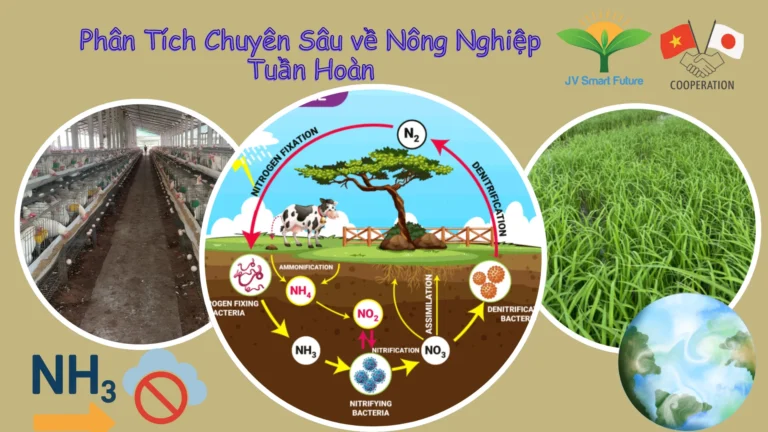
The Carbon Cycle
Carbon does not exist in isolation but circulates through the lithosphere, hydrosphere, atmosphere, and biosphere:
-
Photosynthesis: Plants convert CO₂ into glucose, releasing oxygen.
-
Respiration: Organisms consume consume glucose, releasing CO₂ back into the atmosphere.
-
Decomposition: Bacteria convert organic matter into CO₂ or methane.
This cycle maintains the CO₂ balance, keeping the Earth stable for millions of years.
Why is the element that makes up life other than Carbon?
Although silicon also has 4 valence electrons, the Si-Si bond is less stable than C-C, and silicon dioxide (SiO₂) is a solid that is difficult to participate in biological reactions. Carbon, with its ability to form compounds that are both stable and flexible, is nature’s optimal choice.
Unique atomic structure
-
Electron configuration: Carbon has 6 electrons, with 4 electrons in the outermost shell (L shell). This allows it to form 4 covalent bonds with other elements or itself.
-
Average electronegativity: Carbon has an electronegativity of 2.55 (Pauling scale), between hydrogen (2.2) and oxygen (3.44), which makes it versatile in bonding to both non-metals and metals.
Ability to form a variety of bonds
-
Single, double, triple bonds:
-
Single bond (C–C): Forms long chains (e.g., alkane).
-
Double bond (C=C): Forms unsaturated compounds (e.g., ethylene).
-
Triple bond (C≡C): Occurs in alkynes (eg: acetylene).
-
-
Bonds with other elements: Carbon easily combines with H, O, N, S, P… to form complex organic compounds such as proteins, DNA, carbohydrates.
Flexibility in structure
-
Creating straight chains, branches, rings:
-
Straight chains: Long carbon chains in fats (lipids).
-
Branched chains: Structure of isooctane (fuel).
-
Rings: Benzene (C₆H₆), planar structure with conjugated double bonds, stable and characteristically reactive.
-
-
Hybridization orbital:
-
sp³: Forms tetrahedrons (eg: methane, diamond).
-
sp²: Forms flat triangles (eg: graphene, benzene).
-
sp: Forms straight lines (eg: acetylene).
-
Allotropes of carbon
Carbon exists in many different physical structures, depending on the arrangement of atoms:
-
Diamond
-
sp³ crystal structure, strong C–C bonds.
-
The hardest in nature, insulator, heat conductor good.
-
-
Graphite
-
Graphene layers stacked on top of each other, sp² bonds in each layer.
-
Soft, conducts electricity thanks to free electrons between the layers.
-
- Graphene:
-
A layer of carbon atoms arranged in a honeycomb shape.
-
Super durable, good conductor of electricity and heat, used in nanotechnology.
-
-
Fullerene (C₆₀)
-
Hollow spherical structure consisting of 60 carbon atoms.
-
Used in biomedicine and synthetic materials.
-
-
Amorphous carbon Graphite, activated carbon, carbon black – disordered structure.
-
Applications as adsorbents, electrodes.
Stability and chemical reactivity
-
Strong C–C and C–H bonds:
Help organic compounds survive for a long time in the natural environment.
-
Ability to form isomers:
-
Structural isomers: For example, butane (C₄H₁₀) has straight-chain (n-butane) and branched (isobutane) isomers.
-
Geometric isomers (cis-trans): Occur when there is a double bond (eg: maleic acid and acetic acid fumaric).
-
Optical isomers: Molecules with asymmetric carbon (e.g. glucose).
-
Biological roles of carbon
-
Backbone of biological molecules
-
DNA/RNA: Deoxyribose/ribose sugar (C₅H₁₀O₅) linked to a phosphate group and a nitrogenous base.
-
Protein: Polypeptide chain consisting of amino acids (each amino acid contains at least 2 carbons).
-
Lipid: Glycerol and fatty acids are both carbon-based.
-
-
Energy cycle
-
Photosynthesis converts CO₂ and water into glucose (C₆H₁₂O₆).
-
Cellular respiration breaks down glucose to produce ATP.
-
Industrial and technological applications
-
Fossil fuels: Coal, petroleum, natural gas (containing hydrocarbons).
-
Synthetic materials:
-
Carbon fiber: Light, durable, used in aviation and automobiles.
-
Carbon nanotubes: Conductive, heat-resistant, used in electronics.
-
-
Medicine:
-
Activated carbon adsorbs toxins.
-
Fullerene research for transport medicine.
-
Comparison with Silicon – Potential “replacement” element
Although silicon also has 4 valence electrons, it cannot replace carbon because:
-
The Si–Si bond is weaker than C–C: The silicon chain is unstable and easily broken.
-
Silicon dioxide compound (SiO₂): Is a solid, difficult to participate in biological reactions, in contrast to CO₂ (a diffusible gas).
Carbon and the Global Challenge: Climate Change and Sustainable Development
In the 21st century, carbon is not only the foundation of life but also the center of the global environmental crisis. Human dependence on fossil fuels has turned carbon from a “hero” to a “villain” in the story of Earth’s survival.
Carbon and the consequences of CO emissions₂
- Enhanced greenhouse effect: CO₂ from burning coal and oil traps heat in the atmosphere, causing the Earth’s temperature to increase by 1.1°C compared to pre-industrial times (according to IPCC, 2023).
- Ocean acidification: 30% of CO₂ dissolves in seawater, creating carbonic acid (H₂CO₃), destroying coral ecosystems and limestone shell organisms.
- Climate extremes: Forest fires, floods, and droughts occur frequently due to the disruption of the carbon balance.
Solutions from the element itself carbon
To meet the challenge, humanity is redefining how carbon is used:
-
Renewable energy: Solar panels (using carbon materials such as graphene), wind turbines, biofuels (biofuels from plants) help reduce dependence on fossil fuels.
-
Carbon capture and storage technology (CCUS):
-
Direct from air (DAC): CO₂ scrubbers for underground storage or conversion into synthetic fuels.
-
Reforestation and sustainable agriculture: Enhance natural “carbon sinks” through photosynthesis.
-
-
Next-generation carbon materials:
-
CO₂-absorbing concrete: Using using CO₂-based binders to replace traditional cement.
-
Recycled carbon fibres: Reducing emissions from the materials industry.
-
Carbon neutrality – The goal of the future
Many countries are committed to achieving net zero emissions by 2050. This requires:
-
Clean energy transition: Replacing 80% of fossil fuels with renewable sources.
-
Circular economy: Reusing carbon from waste (e.g. turning CO₂ into bioplastics).
-
Global cooperation: Mechanisms for sharing technology and finance between developed and developing countries.
Conclusion discussion
Carbon will always be an irreplaceable element, but how humanity manages its cycle will determine the future of life. From chemical reactions in cells to international climate agreements, carbon teaches us a lesson about balance: exploiting nature must go hand in hand with regeneration. With creativity and responsibility, humans can turn carbon from a “curse” into a “miracle”, building an Earth where life continues to develop sustainably.