Part 1: Foundational Understanding of Organic Carbon NEMA2 and the Context of Tea Cultivation
This introductory section aims to establish the scientific nature of NEMA2 and identify the specific agronomic challenges in tea cultivation that this product addresses, thereby setting the stage for improving tea quality.
1.1. The Technological Nature of Organic Carbon NEMA2
Organic Carbon NEMA2 is not a conventional fertilizer but a commercial product of a material science innovation called “Organic Carbon.” This technology is the result of research by Dr. Yukihiro Sugiyama and his colleagues from the University of Tokyo, Japan, since the 2000s. The foundation of this technology is the atomic-level processing of cellulose (a common organic compound) through a special manufacturing process, creating a form of carbon with unique properties.
The main physicochemical properties of NEMA2 include:
- Physical Form: The product is an amorphous black powder.
- Particle Size: The Organic Carbon particles are ultra-small, at the atomic level (about 0.16 nm), allowing them to disperse extremely well in water (an estimated 34 million particles in 1 ml of water).
- Chemical Properties: NEMA2 is strongly alkaline with a pH > 8 and has superior ion-capturing capabilities.
- Electrical Properties: A key and distinctive feature is that this material is non-conductive.
- Certifications: The product has received important certifications, including organic certification under Japan’s OMJ standard, as well as international quality management and food safety standards such as ISO 9001:2015 and ISO 22000:2018. This demonstrates compliance with strict production standards and ensures safety for agriculture.
It is important to clarify that “Organic Carbon” is a flexible platform technology used for various purposes. For example, the NEMA1 product is also based on this technology but is optimized for treating odors in livestock farming by breaking down compounds like ammonia (NH_3) and hydrogen sulfide (H_2S). Meanwhile, NEMA2 is specifically designed for agricultural applications, focusing on interaction with the soil ecosystem. This approach shows that the effectiveness of NEMA2 is not coincidental but the result of applying the controlled physicochemical properties of an advanced material to the soil environment.
1.2. Agronomic Challenges of Tea Plantations and the pH Paradox
The tea plant is a perennial industrial crop, and decades of intensive cultivation often lead to severe soil degradation. One of the biggest and most common challenges in tea-growing regions is soil acidity. Essentially, the tea plant is an acid-loving species, growing and developing optimally in a soil pH range of 4.5 to 6.0.
However, the long-term use of acidic chemical fertilizers (such as ammonium-based nitrogen fertilizers) and continuous harvesting (which removes a large amount of biomass and alkaline ions) leads to “hyper-acidification,” causing the soil pH to drop below 4.0. This excessive acidification causes a series of serious problems that directly affect the goal of improving tea quality:
- Nutrient Lock-up: Essential macro and secondary nutrients like Phosphorus (P), Potassium (K), Calcium (Ca), and Magnesium (Mg) become fixed in the soil and unavailable for plant uptake.
- Metal Toxicity: At low pH, metals like Aluminum (Al) and Manganese (Mn) become soluble and accumulate at high concentrations, causing toxicity to the root system, leading to stunted root growth.
- Soil Structure Degradation: The soil becomes compacted and hard, losing its friability, beneficial microorganisms, and the soil ecosystem is disrupted.
- Decline in Plant Health: Tea plants become stunted, with low yields, poor bud quality, and are more susceptible to pests and diseases, especially root diseases like root rot.
Here, a technical paradox arises: NEMA2 is a highly alkaline product (pH > 8), while the tea plant is acid-loving. Using an alkaline substance for an acid-loving plant seems contradictory. However, the crux of the matter lies in NEMA2’s role. Its purpose is not to make the soil alkaline, but to act as a powerful regulator or buffer, helping to correct soils that have become hyper-acidified (pH < 4.5). By raising the pH from a toxic level (e.g., 3.8) back to the optimal range (e.g., 5.0 - 5.5), NEMA2 is actually making the soil less acidic, not alkaline. This understanding is crucial, as it repositions NEMA2’s role: not as a conventional soil amendment, but as a precise technical tool to restore the ideal chemical environment that the acid-loving tea plant needs to thrive.
Part 2: Multifaceted Mechanisms of Action in the Soil Ecosystem
This section will analyze in detail how the unique properties of NEMA2 translate into specific agronomic benefits when introduced into the soil environment, contributing directly to the goal of improving tea quality.
2.1. Impact on Soil Chemistry: pH Neutralization and Detoxification
The primary and most immediate mechanism of NEMA2 is chemical. With a pH > 8, when introduced into the soil, the Organic Carbon particles react and neutralize excess hydrogen ions (H^+), the main cause of soil acidity. This process helps raise the soil pH from an overly acidic level to the optimal range for tea plants (4.5 – 6.0).
A direct consequence of pH adjustment is the “unlocking” of nutrients. At very low pH, phosphorus is often fixed by iron and aluminum, becoming unavailable to the plant. When the pH is raised, these forms of phosphorus are released. At the same time, raising the pH also significantly reduces the solubility of toxic metal ions like aluminum (Al^{3+}), preventing root toxicity. Furthermore, the manufacturer claims that NEMA2 can help break down pesticide residues accumulated in the soil over many years, creating favorable conditions for tea gardens wishing to transition to organic farming or higher safety standards.
The causal chain can be described as follows: NEMA2 has high alkalinity → Neutralizes excess H^+ ions in the soil solution → Raises soil pH to the 4.5 – 6.0 range → Reduces the solubility of Al^{3+} (detoxification) → Increases the availability of nutrients P, K, Ca, Mg → Creates a favorable chemical environment for root function and nutrient absorption.
2.2. Optimizing the Nutrient Cycle: The Nitrogen Conversion Engine
This is one of the core benefits emphasized. In conventional agriculture, more than 50% of the nitrogen fertilizer applied to the soil is often lost through volatilization, leaching, or inefficient conversion, causing economic waste and environmental pollution. NEMA2 is claimed to significantly improve nitrogen use efficiency through the following mechanisms:
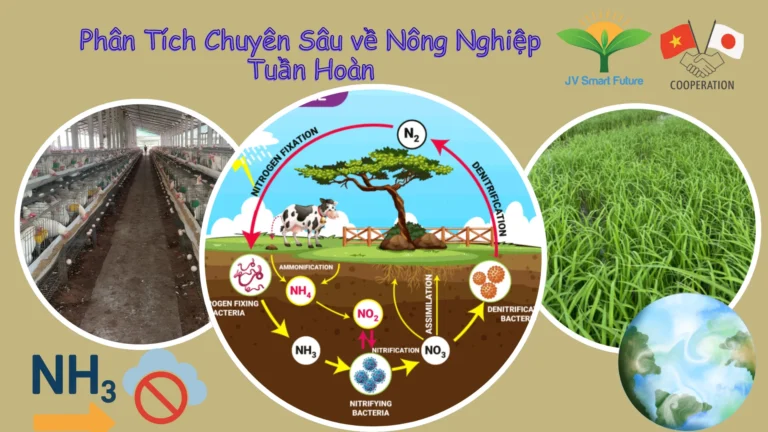
- Accelerated Mineralization: NEMA2 promotes the conversion of complex organic nitrogen compounds in the soil into inorganic forms that plants can directly absorb, namely ammonium (NH_4^+) and nitrate (NO_3^-), shortening the time for nutrient delivery to the plant.
- Nitrogen Stabilization: The product helps retain nitrogen forms in the soil, reducing losses from volatilization (especially ammonia) and leaching (nitrate).
- Increased Efficiency: Cited experiments conducted at Can Tho University showed that combining NEMA2 with NPK fertilizer yielded the highest overall efficiency, allowing for a reduction of up to 30% in NPK application while still maintaining yield. With just a dosage of 200g of NEMA2 per 1,000 m2, the nitrogen conversion capacity increased threefold compared to the control soil without its use.
The mechanism behind this efficiency is a combination of chemical and biological effects. NEMA2 does not act as a direct catalyst in biochemical reactions. Instead, by adjusting the soil pH to the optimal level (mechanism 2.1), it creates an ideal living environment for microbial populations that perform nitrogen conversion (mechanism 2.3). The “activation of microorganisms” is the real engine behind the enhanced nitrogen conversion. NEMA2 acts as the key to start and optimize this natural biological machinery of the soil.
2.3. Soil Biological Recovery: Creating a Safe Environment for Microorganisms
NEMA2 has a positive impact on the recovery of the soil microbial ecosystem. This product stimulates the growth of beneficial microorganisms, including nitrogen-fixing bacteria and organic matter decomposers.
A unique mechanism mentioned is the material’s non-conductive property. In the soil, ion flows and potential differences can cause stress to the cell membranes of microorganisms. The non-conductive property of NEMA2 is said to help create an electrochemically “safe zone,” protecting microbial cell membranes from abnormal ion flows, thereby reducing stress and allowing them to thrive. This improved microbial environment also leads to the growth of larger beneficial organisms like earthworms, which are the natural “engineers” of the soil ecosystem.
The chain of effects can be visualized as follows: Application of NEMA2 → Soil pH is optimized AND the material’s non-conductive property creates an electrochemically stable microenvironment → Reduced stress on microbial cell membranes → Population and activity of beneficial microorganisms (nitrogen-fixing bacteria, decomposers) increase → Health of the soil ecosystem and nutrient cycling are restored.
2.4. Physical Soil Restructuring: From Hardpan to Friable
An inherent problem of old tea gardens is soil compaction, hardening, and degradation (“hardpan soil,” “degraded soil”). NEMA2 contributes to improving the physical structure of the soil, helping to increase humus content, friability, and aeration (“making the soil friable”).
This physical improvement brings many benefits. More friable soil retains water better, reduces irrigation needs, and more effectively combats erosion. More importantly, an aerated soil structure allows the tea plant’s root system to grow deep and wide, providing the foundation for a healthy and resilient crop, a key factor for improving tea quality.
The physical, chemical, and biological benefits of NEMA2 do not exist in isolation but create a positive feedback loop. Improved physical structure (friability) allows for better water and air circulation, which benefits microorganisms. A thriving microbial ecosystem (biology) decomposes organic matter more efficiently, further improving soil structure and releasing nutrients (chemistry). An optimized chemical environment (pH) reduces toxic elements, allowing plant roots to grow deeper, and the roots themselves contribute to improving soil structure. Therefore, NEMA2 should not be seen as a product with three separate benefits, but as a comprehensive soil restoration agent that initiates a chain of interconnected improvements, leading to the complete revival of the soil ecosystem.
Part 3: Technical Application Process for Tea Plantations
This section provides practical and highly applicable guidance for tea plantation managers and farmers, based on common technical guides for tea cultivation and care.
3.1. Strategic Application for Plantation Restoration and Rejuvenation
For old, degraded, or low-yielding tea gardens, NEMA2 is positioned as a foundational restoration tool. This process involves using the product to restore soil health before or concurrently with other technical measures such as heavy pruning or rejuvenation pruning. A healthy soil environment is a prerequisite for the tea plant to have enough energy to vigorously regenerate new shoots after pruning. For severely degraded lands such as barren or acidic sulfate soils, NEMA2 is considered a primary reclamation tool.
The timing of NEMA2 application is strategic. The best recovery effect is achieved when the product is applied during the plant’s dormant period (after the main harvest) or immediately after restorative pruning. This is when the plant’s priority shifts from producing leaf buds to restoring the root system and accumulating nutrients, and a healthy soil foundation will optimize this process.
3.2. Dosage and Frequency Guidelines
Although the documents do not provide specific dosages for tea plants, clear guidelines for other industrial and perennial crops can be reasonably adapted and applied. Data from sources indicate:
- Standard Application: 1.0 – 1.5 kg/ha.
- Restoring Old Orchards: Apply twice a year.
- Annual Maintenance: Apply once a year, usually after the harvest season.
Based on this information and practical experience, a detailed application protocol for different stages of a tea garden is proposed in the table below. It is important to emphasize that conducting a soil test to determine the initial pH is a necessary step to adjust the dosage for the best and most effective results.
| Tea Plantation Stage | Primary Goal | NEMA2 Dosage (per ha) | Application Method | Frequency | Important Notes |
|---|---|---|---|---|---|
| New Planting / Establishment | Develop a healthy root system, improve initial soil structure | 1.0 kg | Mix with water, drench into planting holes/trenches before planting | Once during land preparation | Ensures optimal soil pH and microbial activity from the start. |
| Productive Tea / Harvest Stage | Maintain soil health, optimize nutrient absorption efficiency | 1.0 – 1.5 kg | Mix with water and drench or spray evenly on the soil around the base | Once/year, after the main harvest | Helps replenish nutrients removed and neutralize acidity from fertilizers. |
| Post-Pruning / Rejuvenation | Stimulate rapid recovery, support uniform new shoot growth | 1.5 kg | Mix with water and drench the base thoroughly immediately after pruning | Once, can be supplemented with a second application after 6 months | Provides an ideal soil foundation for the plant’s regeneration process. |
| Severely Degraded Soil | Adjust pH, detoxify, regenerate soil structure | 1.5 – 2.0 kg | Mix with water and drench the base thoroughly | Twice/year for the first 1-2 years | Soil testing is mandatory to monitor pH changes and avoid over-application. |
3.3. Application Method and Important Considerations
The main application method is to mix NEMA2 powder with water to create a suspension, then drench or spray it directly onto the soil around the base of the plant. The goal is to introduce the material into the soil, where it can exert its chemical and biological effects.
Thanks to its ultra-small particle size (atomic level), NEMA2 can be easily dispersed in water, facilitating application through irrigation systems or sprayers. A technical note is that due to the product’s high alkalinity, the equipment used (sprayers, irrigation systems) should be thoroughly rinsed immediately after use to prevent corrosion or residue buildup.
Part 4: Integrated Fertilization Strategy with NEMA2
This section directly addresses the user’s question about how NEMA2 integrates into existing fertilization programs, including chemical, organic, and microbial fertilizers, with the ultimate goal of improving tea quality.
4.1. Coordination with Chemical Fertilizers (NPK)
NEMA2 is not a replacement for NPK fertilizers but an efficiency enhancer. By improving soil health and the nutrient cycle, it significantly increases the use efficiency of chemical fertilizers. The core claim is the ability to reduce NPK fertilizer application by up to 30% without decreasing, and possibly even increasing, yield. This is achieved by reducing nutrient loss from leaching and volatilization, while ensuring the crop can absorb a higher proportion of the applied fertilizer.
Economically, a 30% reduction in NPK fertilizer equates to a direct and significant cut in one of the largest variable costs in tea cultivation. This is a strong economic incentive for adopting the product.
4.2. Coordination with Organic Fertilizers (Manure, Compost)
NEMA2 acts as a powerful catalyst for the organic composting process. When mixed with organic materials (such as manure, crop residues), it provides the following benefits:
- Shortens Composting Time: Reduces composting time by 20-30% compared to conventional methods.
- Effective Odor Control: Decomposes odor-causing compounds like ammonia, improving the environment in the composting area.
- Enhances Finished Compost Quality: Creates a favorable environment for beneficial microorganisms to grow, resulting in fully decomposed, nutrient-rich compost.
For farms that integrate livestock and crop production, NEMA2 offers a dual benefit: it improves the on-site organic fertilizer production process and amends the soil where that fertilizer will be applied. This creates a closed-loop, highly efficient, and sustainable nutrient cycle.
4.3. Coordination with Microbial Fertilizers: A Critical Process
This is the area that requires the most precise technical guidance. A critical warning is issued: ABSOLUTELY DO NOT mix NEMA2 with live microbial fertilizer products in the same container. The very high pH of NEMA2 can kill or inhibit living microorganisms, completely nullifying the effect of the microbial fertilizer.
To achieve optimal effectiveness from both products, a strict sequential process must be followed:
- Step 1 (Foundation Improvement): Apply Organic Carbon NEMA2 to the soil first. The purpose is to adjust the pH, improve the structure, and create an ideal “home” for microorganisms.
- Step 2 (Waiting Period): Wait for a period of time (about 3-5 days). This interval allows NEMA2 to react with the soil and for the pH to stabilize in the optimal range.
- Step 3 (Inoculation): Apply the microbial fertilizer. At this point, the microorganisms are introduced into a prepared environment where they can thrive and perform their functions to the fullest.
Adhering to this process is one of the most valuable practical recommendations. It helps prevent costly application mistakes and ensures that both products deliver their expected benefits.
| Fertilizer Type | Coordination Mechanism with NEMA2 | Recommended Application Process | Expected Outcome |
|---|---|---|---|
| Chemical (NPK) | Reduces nutrient loss (leaching, volatilization); enhances plant uptake due to improved root health and soil pH. | Apply NEMA2 as a foundational soil treatment. Reduce standard NPK dosage by up to 30% and monitor plant response. | Significant savings on fertilizer costs; reduced environmental pollution; stable or increased yield. |
| Organic (Compost/Manure) | Accelerates decomposition; controls odor; enriches the finished compost with beneficial microorganisms. | Mix NEMA2 into the compost pile during preparation (1-2 kg/ton of organic material). | Shorter compost production time; higher quality, nutrient-rich compost; improved farm sanitation. |
| Microbial | Creates an ideal soil environment (pH, structure, low stress) for microorganisms to grow and function. | IMPORTANT: Apply NEMA2 to the soil first. Wait 3-5 days. Then apply microbial fertilizer. DO NOT MIX TOGETHER. | Maximizes the effectiveness of microbial products; enhances long-term soil biology and fertility. |
Part 5: Comprehensive Evaluation and Professional Recommendations
This final section synthesizes the analysis to provide a strategic conclusion for tea growers regarding the application of NEMA2 for improving tea quality.
5.1. Overall Benefits and Potential Limitations
Summary of Benefits: NEMA2 is not merely a fertilizer but a foundational soil conditioner. Its value lies in its ability to restore the fundamental health of the soil ecosystem in chemical, biological, and physical terms. This leads to healthier plants, higher yields, better tea quality, and increased resilience of the plants to stress factors and pests.
Limitations and Considerations: The main limitation is the requirement for careful management. Due to its high pH, overuse on soils that are already within the optimal pH range can be harmful. Therefore, initial and periodic soil testing is not just a recommendation but an essential requirement for using the product responsibly and effectively. The initial investment cost of the product is also a factor to be considered in the economic analysis.
5.2. Economic Efficiency Analysis: Return on Investment (ROI)
To assess economic feasibility, both costs and benefits must be considered.
- Cost Factors: Purchase cost of NEMA2 product; labor costs for application.
- Benefit Factors (for ROI calculation):
- Direct Savings: Reduced expenditure on NPK fertilizers (up to 30% as claimed).
- Indirect Savings: Potential reduction in the need for pesticides due to healthier plants; reduced irrigation costs due to better soil moisture retention.
- Increased Revenue: Potential for increased yield; potential to achieve higher prices for tea grown sustainably or organically, for which NEMA2 is a tool to support the transition.
- Long-Term Value: Increased productive lifespan of the tea garden, delaying the need for costly replanting.
The economic efficiency of NEMA2 is most evident when viewed as a long-term investment in the farm’s primary asset: its soil. The short-term return on investment from fertilizer savings can be significant, but the long-term value derived from improving soil health and extending the plantation’s lifespan is even greater.
5.3. Strategic Recommendations for Tea Growers
Based on the comprehensive analysis, the following strategic recommendations are proposed for tea plantation managers and farmers:
- Adopt a “Soil-First” Philosophy: View NEMA2 as a strategic tool to restore and maintain soil health, which is the foundation of sustainable productivity and the key to improving tea quality.
- Invest in Soil Analysis: Before implementing NEMA2, conduct a comprehensive soil analysis to establish baseline indicators for pH, organic matter, and nutrient content. This allows for a targeted, data-driven application.
- Implement a Pilot Program: For large plantations, it is advisable to start with a trial area on a specific problem plot (e.g., an old, low-yielding section) to validate the effectiveness and ROI under local conditions before scaling up.
- Integrate, Don’t Isolate: Fully integrate NEMA2 into the overall fertilization plan according to the procedures outlined in Part 4, especially by strictly adhering to the application sequence when combining with microbial fertilizers.
- Leverage for Market Advantage: For producers targeting premium markets, documenting the use of NEMA2 can be part of the story of transitioning to sustainable or organic farming practices. This can be a powerful marketing tool to position the tea product at a higher price point.
#ImprovingTeaQuality #OrganicCarbonNEMA2 #TeaCultivation #OrganicTea #SoilRemediation #OrganicFertilizer #SustainableAgriculture #JVSF #JapaneseTechnology #TeaGardenRestoration #CropNutrition #SoilpH #SmartFarming #VietnameseTea #TeaGrowingTechniques