Increasing Hydroponic Yield: A Breakthrough Secret with Organic Carbon NEMA2
Hydroponic cultivation is opening a new era for modern agriculture, allowing for the production of clean food with high output. However, to succeed, growers are always searching for solutions to increase hydroponic yield. This article will delve into a groundbreaking biotechnology solution from Japan – Organic Carbon NEMA2, the key to helping you achieve this goal.
Part I: Challenges Hindering the Increase of Hydroponic Yield
1.1. The Core Principles of Soilless Agriculture
Hydroponics is a soilless cultivation technique where plants absorb nutrients directly from a mineral solution dissolved in water. Instead of competing for resources in the soil, plants are provided with a complete and controlled nutrient profile, allowing for accelerated and highly efficient growth. The three basic components of a hydroponic system include the plants, an inert substrate (like coco coir, lightweight expanded clay aggregate) for physical support, and a precisely formulated nutrient solution.

1.2. Advantages and Technical Barriers
Despite its great potential, increasing hydroponic yield is not simple. This method yields 3 to 10 times more and allows for 5-6 crops per year. However, barriers include high initial investment costs and the need for deep technical expertise. The greatest risk, in particular, is the spread of pathogens like the root rot-causing fungus Pythium, which can quickly destroy an entire crop and severely reduce yield. Managing these risks is the decisive factor for success.

Part II: Organic Carbon NEMA2 – The Key to Increasing Hydroponic Yield

2.1. A Clear Distinction: NEMA2 Is Not Biochar
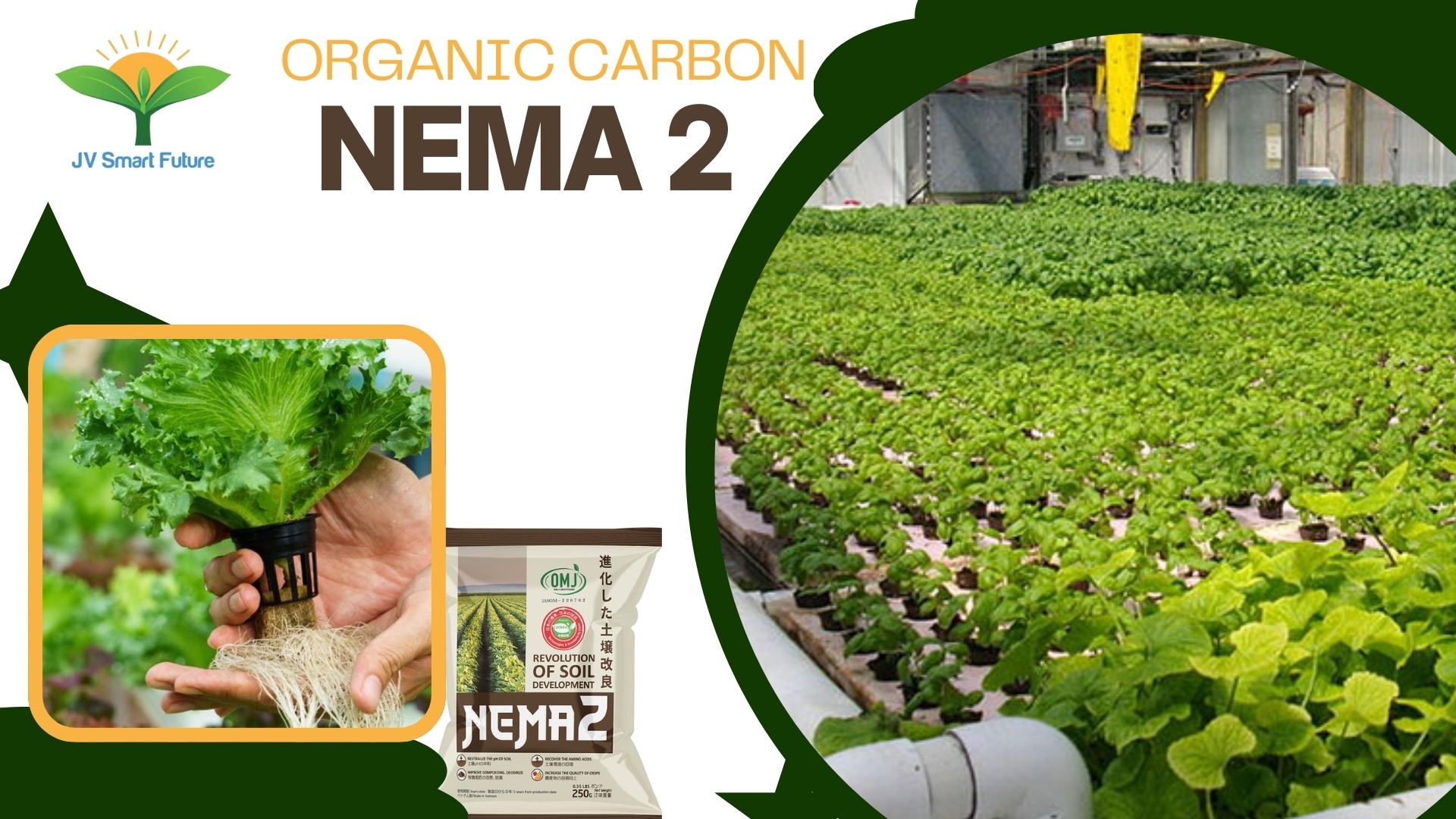
First and foremost, it must be stated: Organic Carbon NEMA2 is not biochar. This is a common misconception that can lead to incorrect application. NEMA2 is a high-tech product, patented in Japan, consisting of organic carbon atoms at a nano-scale (approximately 0.16 nm) in an amorphous form. Conversely, biochar is a macro-material with a porous structure created from the pyrolysis of biomass. NEMA2 acts as a biochemical catalyst at the molecular level, while biochar is a physical conditioner.
2.2. Origin and Scientific Basis
Organic Carbon NEMA2 is the commercial product of an invention by Dr. Yukihiro Sugiyama and his colleagues at the University of Tokyo. In Vietnam, the product is manufactured and distributed by Japan Vietnam Smart Future Joint Stock Company (JVSF). The product’s credibility is guaranteed by strict quality certifications, including organic certification under the Japanese Agricultural Standard (JAS-OMJ) and international standards such as ISO 9001:2015 and ISO 22000:2018.
2.3. Breakthrough Mechanism of Action in Hydroponic Solutions
Instead of passively supplying nutrients, NEMA2 actively improves the plant’s living environment at a microscopic level, delivering outstanding results in increasing hydroponic yield through three main mechanisms:
Superior Root Development Stimulation
The root system is the “heart” of a plant in a hydroponic system. A healthy, well-branched root system maximizes nutrient absorption, a crucial factor for increasing hydroponic yield. Studies and practical applications have shown that Organic Carbon can vigorously stimulate root system development, which is the source for the development of enzymes, amino acids, and proteins, helping to increase the plant’s resistance. This creates a solid foundation for fast and healthy plant growth.
Creating a Beneficial Microbial Environment – A Natural Biological “Shield”
This is NEMA2’s revolutionary benefit. The product has been proven to activate and promote the growth of beneficial microorganisms. In a hydroponic solution, a thriving community of beneficial microbes acts as a natural immune system:
- Pathogen Inhibition: Beneficial microorganisms directly compete with harmful pathogens like Pythium fungus, creating a natural “biological protective barrier” around the root system, minimizing the risk of disease and protecting the yield.
- Enhanced Mineral Uptake: Many beneficial microorganisms help convert minerals in the solution into more easily absorbable forms, helping plants use nutrients more efficiently for growth.
Boosting Nutrient Absorption Efficiency
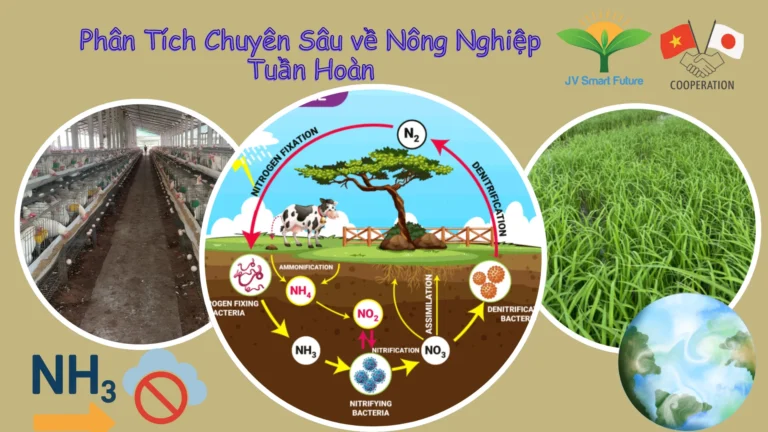
NEMA2’s core mechanism of action is its ability to enhance nitrogen metabolism, helping plants absorb ammonium (NH_4^+) and nitrate (NO_3^-) forms more effectively. A trial at Can Tho University showed that NEMA2 tripled the nitrogen metabolism rate and saved up to 30% of NPK fertilizer. Applied to hydroponics, this mechanism helps plants absorb nutrients optimally, leading to faster growth and is a direct factor in increasing hydroponic yield.
2.4. Risk Assessment and Considerations
A common question is whether the alkaline nature (pH > 8) of NEMA2 will alter the pH of the hydroponic solution. The answer is negligibly. Organic Carbon NEMA2 is used in very low doses (e.g., only about 10-20 grams per 100 liters of water). When diluted in a large volume, its impact on the overall system pH is minimal and does not cause sudden, harmful pH shocks to the plants.
Part III: Synthesis and Strategic Recommendations
3.1. Paradigm Shift: From Passive Management to a Proactive Ecosystem
To increase hydroponic yield sustainably, integrating NEMA2 represents a paradigm shift from merely managing the chemical factors of the solution to proactively managing the biological dynamics of the water environment. This is an advanced approach that transforms the nutrient solution into a living ecosystem capable of self-regulation and enhancing plant health.
3.2. Pilot Implementation Guide
As this is a new application, growers should start with a small-scale trial to evaluate its effectiveness. Use a deep water culture (DWC) system with multiple separate reservoirs for comparison. Apply NEMA2 at extremely small doses and monitor key indicators such as pH fluctuations, nutrient concentrations, root health, and biofilm formation compared to a control group without NEMA2.
Learn More and Visual Guides
To help you better understand the product and techniques for increasing hydroponic yield, we have compiled some useful resources.
Introduction Video to Organic Carbon Technology
Watch the video below to learn more about JVSF company and the groundbreaking Organic Carbon technology from Japan.
Product Information and Technical Documents
- Detailed information on Organic Carbon NEMA2 product: View on the JVSF website.
- Technical guide for growing leafy vegetables using hydroponics: Download from HCMC Agricultural Extension Center.
Conclusion: Integrating Organic Carbon NEMA2 into your cultivation process is a strategic step to increase hydroponic yield. By focusing on stimulating roots and nurturing a beneficial microbial ecosystem, NEMA2 helps solve the inherent challenges of hydroponics, thereby minimizing risks, optimizing costs, and achieving superior output sustainably.